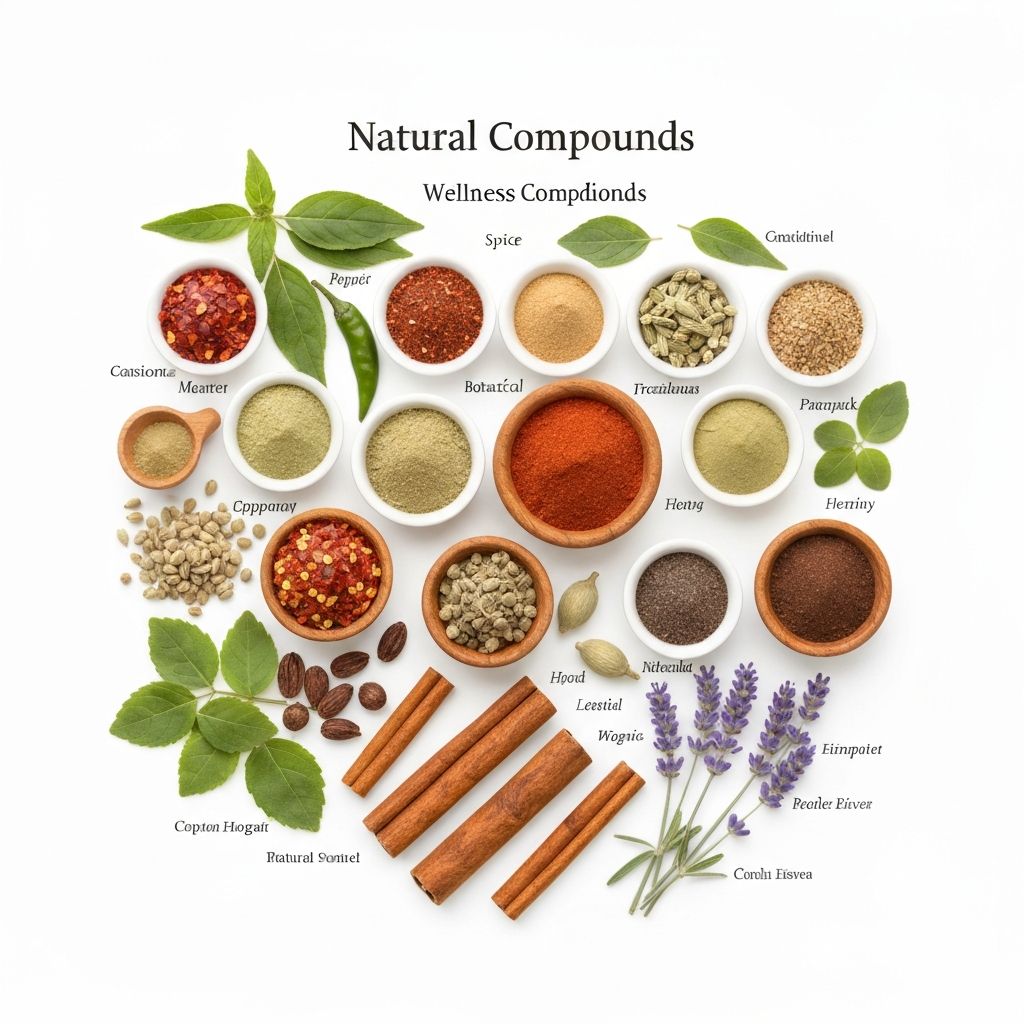
Catalog of Natural Wellness Compounds
Educational Overview of Natural Ingredients for Men's Health
Understanding Natural Wellness Compounds
This catalog provides educational information about natural compounds used in wellness contexts. Each entry explains the compound's general functions and dietary sources without making medical claims.
Understanding Omega-3 Fatty Acids
Description: Omega-3 fatty acids are polyunsaturated fats found in various foods. They support cellular membrane structure and function, contributing to overall cellular health and balanced nutrition.
General Benefits:
- Supports general cellular health
- Contributes to balanced nutrition
- Found in multiple food sources
Dietary Sources: Fatty fish (salmon, mackerel), flaxseeds, chia seeds, walnuts, and seaweed
The Basics of Magnesium
Description: Magnesium is a mineral essential for many enzymatic reactions in the body. It participates in over 300 biochemical reactions, supporting general muscle and nerve function.
General Benefits:
- Essential for energy metabolism
- Supports muscle and nerve function
- Contributes to electrolyte balance
Dietary Sources: Dark leafy greens, nuts, seeds, legumes, whole grains, and cocoa
Vitamin D: A General Overview
Description: Vitamin D is produced by the body through sun exposure and obtained from dietary sources. It plays important roles in calcium absorption and immune system support.
General Benefits:
- Aids in calcium absorption
- Supports immune system function
- Contributes to bone and muscle health
Dietary Sources: Fatty fish, egg yolks, fortified dairy products, and mushrooms exposed to sunlight
Additional Compounds Overview
Zinc: Enzymatic Support
Description: Zinc is an essential mineral involved in protein synthesis and numerous enzymatic processes. It supports immune system function and wound healing through its role in enzyme activity.
General Functions: Protein synthesis, DNA creation, immune support, wound healing
Dietary Sources: Oysters, beef, pumpkin seeds, chickpeas, and cashews
Selenium: Antioxidant Mineral
Description: Selenium is a trace mineral that acts as an antioxidant through selenoprotein formation. It supports thyroid function and participates in various protective mechanisms throughout the body.
General Functions: Thyroid support, antioxidant protection, reproductive health, immune function
Dietary Sources: Brazil nuts, seafood, whole grains, eggs, and mushrooms
B Vitamins: Energy and Metabolism
Description: B vitamins serve as coenzymes in energy production and metabolism. They support nervous system function and help convert nutrients into usable energy.
General Functions: Energy metabolism, nervous system support, protein synthesis, cell division
Dietary Sources: Whole grains, meat, fish, legumes, leafy greens, and dairy products
Botanical Compounds in Wellness Context
Traditional botanical extracts have been used in various cultures for general wellness. Modern research continues examining these compounds to understand their properties and mechanisms.
Important Note on Botanical Compounds
Traditional use of a botanical does not guarantee modern efficacy or safety. Different cultures have valued various plants for specific reasons based on historical context and available knowledge. Contemporary scientific evidence varies significantly among botanical extracts—some have robust research support while others require additional study.
All botanical compounds, like all substances, require appropriate assessment based on available research rather than traditional use alone. Individual responses and potential interactions must be considered before use.
Tribulus Terrestris
A plant used in traditional medicine systems for general wellness. Modern research continues examining its properties, though claims regarding specific effects require careful scientific evaluation.
Saw Palmetto
Used traditionally in Native American wellness practices. The plant contains compounds that have been studied in research contexts, with scientific understanding continuing to evolve.
Medicinal Mushrooms
Various cultures, particularly in Asia, have traditionally used specific mushroom species. Research continues examining their bioactive compounds and potential wellness applications.
Ginseng
Valued in traditional Asian medicine for vitality and wellness. Contains compounds like ginsenosides being studied for their properties and mechanisms in biological systems.
Ginger
Used traditionally for digestive and general wellness support. Contains active compounds like gingerols studied for their effects on various body systems.
Turmeric
Contains curcumin, a compound extensively studied for its potential cellular effects. Valued in traditional medicine and increasingly examined in modern research.
Amino Acids and Protein Compounds
Amino acids are building blocks of proteins, essential for muscle function, enzyme production, and numerous physiological processes. The body requires all 20 amino acids, with 9 considered essential as they must be obtained from food.
| Amino Acid Type | General Function | Common Dietary Sources |
|---|---|---|
| Essential Amino Acids | Must be obtained from food; all 9 are required for protein synthesis | Meat, fish, eggs, dairy, legumes, soy |
| Branched-Chain Amino Acids (BCAAs) | Support muscle protein synthesis and energy during exercise | Meat, dairy, eggs, nuts, seeds, legumes |
| Conditionally Essential | Normally non-essential but become essential during stress or intense activity | Meat, fish, dairy, legumes, nuts |
| Non-Essential Amino Acids | Body can synthesize these, but dietary intake contributes to overall protein adequacy | Most protein-containing foods |
Educational Purpose Disclaimer
This catalog provides general information for educational purposes only. It does not offer individual medical advice or recommendations about which compounds to use. The information presented here should not replace personal decisions or professional consultations. Individual responses to different compounds vary significantly based on personal health status, medications, allergies, and genetic factors.